Abdominal Adhesions: Why You Need More Than Just Surface Level Treatment
Reviewed by Dr. Jordan Barber, DACM, L.Ac.
January 25, 2026
4 min read
Why ultrasound-guided therapy often misses the mark—and how “tactile precision” resolves deep scar tissue for good.
If you are suffering from abdominal tightness, bloating that won’t go away, or sharp pulling pains after a C-section or laparoscopic surgery, you have likely gone down the “abdominal adhesion” rabbit hole.
You may have seen clinics promoting Ultrasound-Guided Techniques as the gold standard. It sounds impressive—using a machine to “see” the scar tissue. But here is the uncomfortable truth: You cannot fix a 3-dimensional mechanical problem just by looking at it on a screen.
We believe that relies too heavily on technology and not enough on feel. Adhesions are not just static “spots” on an ultrasound; they are complex, web-like restrictions that glue your muscles, fascia, and organs together.
To actually release them, you need Tactile Feedback, not just a visual guide. Here is why our hands-on approach (Dry Needling, IASTM, and Myofascial Release) gets results where high-tech monitoring often fails.
1. The “Iceberg” Effect (Why Ultrasound Misses the Point)
Ultrasound is a fantastic diagnostic tool, but it has limits. It is excellent at showing where a nerve is or where a fluid pocket lies, but it is notoriously poor at quantifying fascial stiffness or the subtle “glide” between tissue layers.
Scar tissue is like an iceberg. The visual component is small, but the functional restriction—the way it alters how you breathe, move, and digest—is massive.
Our Approach: We use advanced manual palpation to identify the texture and mobility of the tissue. We don’t just look for the scar; we feel for the “drag.” If your C-section scar is pulling on your diaphragm, an ultrasound might show the anatomy is “normal,” but your body knows it isn’t. We treat the dysfunction, not the image.
2. Dry Needling: Remodeling from the Inside Out
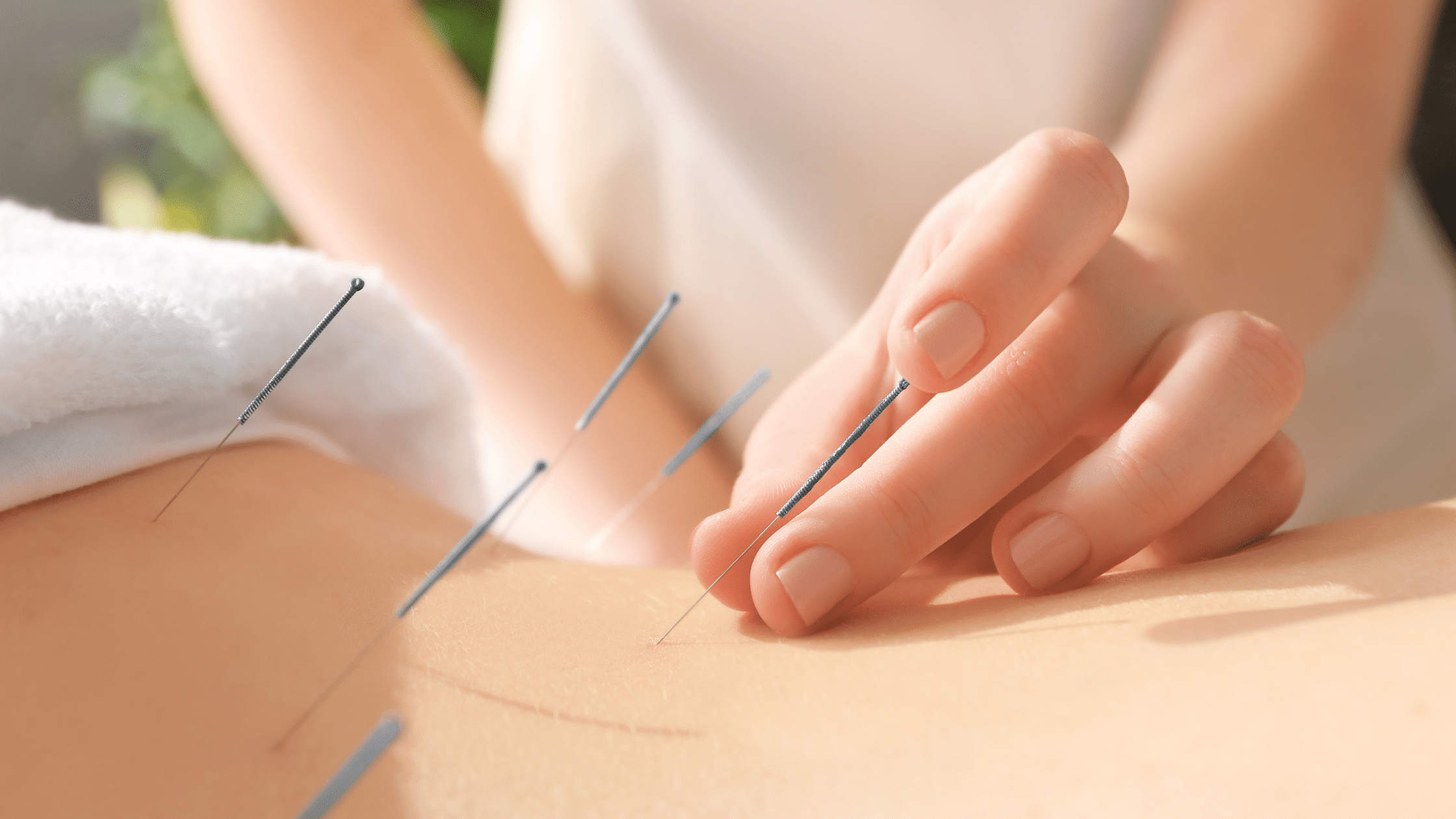
Competitors might use ultrasound to guide an injection, but injections often just numb the area. We use Dry Needling to physically remodel the tissue structure.
When we insert a monofilament needle into dense scar tissue, we aren’t just poking it. We are creating a precise localized inflammatory response. This triggers a process called mechanotransduction.
The Science: According to research in Evidence-Based Complementary and Alternative Medicine, twisting the needle winds collagen fibers around the shaft (like spaghetti on a fork). This physically stretches the fibroblasts (cells that build tissue), signaling them to remodel and realign the chaotic scar tissue into healthy, flexible mesh.¹
No machine can replicate this mechanical remodeling.
Adhesions are like layers of plastic wrap stuck together. To separate them, you need shear force.
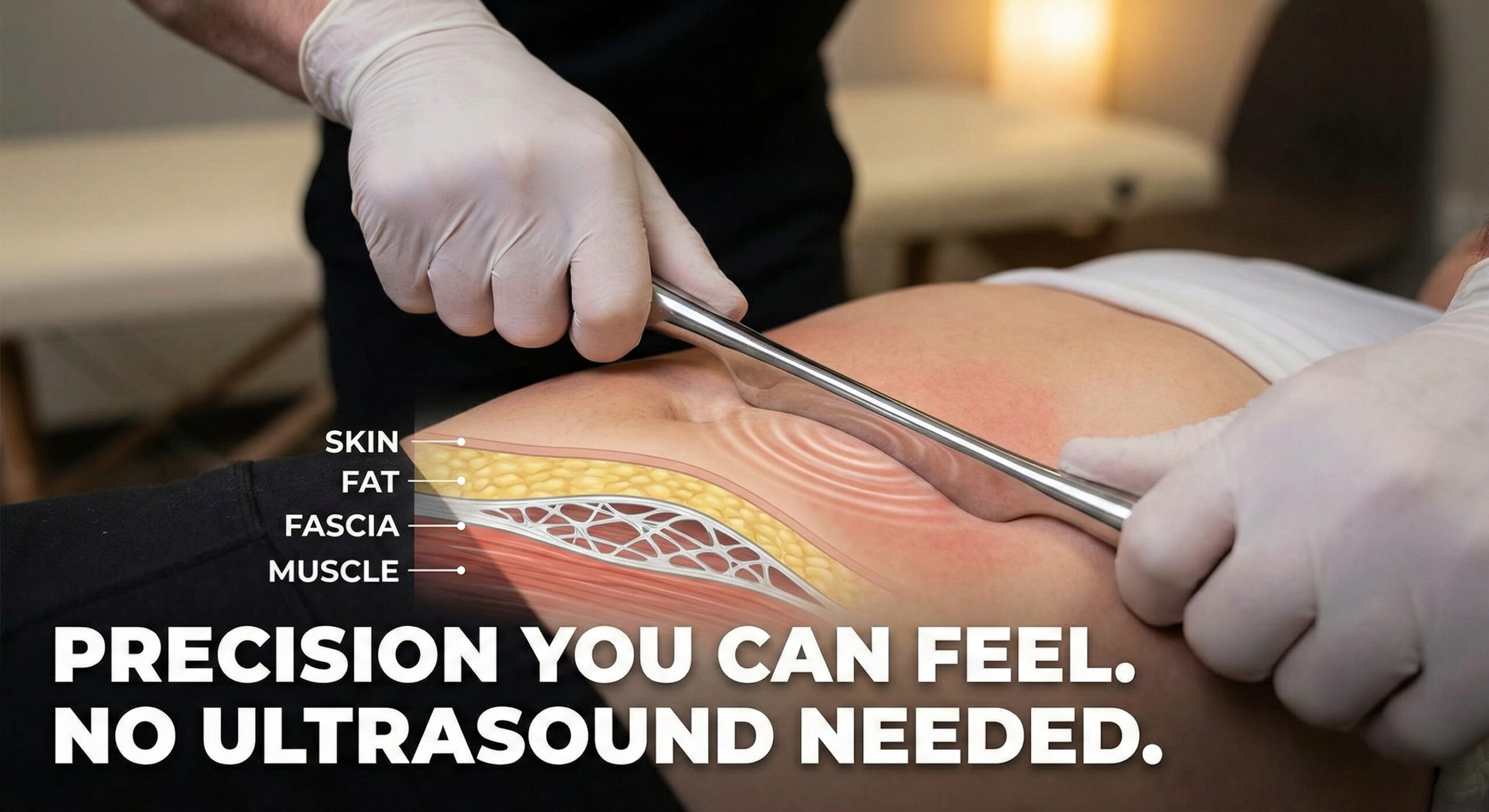
We use Instrument Assisted Soft Tissue Mobilization (IASTM). These are specialized stainless-steel tools that amplify the texture of the tissue. They allow us to detect “grit” (fibrosis) that human fingers might miss and apply a targeted shearing force that breaks down cross-links between collagen fibers.
The Science: A study in the Journal of Physical Therapy Science demonstrated that IASTM increases blood flow and fibroblast proliferation, effectively “melting” the stiffness in chronic scars and improving range of motion more effectively than static pressure alone.²
4. Visceral Release: Unlocking the “Gut Brain”
Adhesions don’t just hurt; they disrupt digestion. Scar tissue can pin the small intestine to the abdominal wall or restrict the bladder.
While an ultrasound-guided treatment might focus on the pain signal (nerves), we focus on the organ mobility. Using gentle, rhythmic Manual Myofascial Release, we restore the natural “motility” (movement) of your viscera. This is why our patients often report improvements in bloating and regularity, not just pain relief.
The Science: Clinical trials have shown that manual therapy protocols (like the Wurn Technique or visceral manipulation) can effectively decrease adhesion-related pain and improve quality of life, often preventing the need for further surgeries.³
The Dr. Barber Difference: “Feel the Restriction, Fix the Mechanics.”
We don’t need a monitor to tell us your abdomen is tight. We need your feedback and our tactile expertise to release it.
We Don’t Numb It: We use Dry Needling to fix the tissue structure, not just mask the pain with fluid.
We Restore Glide: Using IASTM and manual release, we ensure your skin, muscle, and organs can slide past each other freely again.
We Treat the Whole System: We connect your abdominal scar to your back pain, your breathing, and your pelvic floor.
Langevin HM, et al. Mechanical signaling through connective tissue: a mechanism for the therapeutic effect of acupuncture. FASEB J. 2001;15(12):2275-2282. PubMed Link
Kim J, Sung DJ, Lee J. Therapeutic effectiveness of instrument-assisted soft tissue mobilization for soft tissue injury: mechanisms and practical application. J Phys Ther Sci. 2017;29(2):386-390. PubMed Link
Rice AD, et al. Treating Small Bowel Obstruction with a Manual Physical Therapy: A Prospective Efficacy Study. Biomed Res Int. 2016;2016:7610387. PubMed Link
Pelvic pain often stems from identifiable muscle and nerve dysfunction, not a mystery that needs to be managed indefinitely. Patients searching for pelvic floor acupuncture NYC are usually looking for…
Male pelvic floor dysfunction is a musculoskeletal and neurological condition, though it is frequently misunderstood or misdiagnosed as something else entirely. Men who search for male pelvic floor dysfunction acupuncture…
The signature of sciatica is hard to mistake. A sharp pain shoots from the lower back or buttock down the back of the leg, sometimes with numbness, tingling, or a…
Ready when you are.
Limited spots each week — book now to reserve yours.
Evidence-based acupuncture and dry needling on the Upper West Side. From chronic pain and headaches to pelvic floor dysfunction, Dr. Jordan Barber pairs the highest level of training with care that actually listens.
This site does not provide medical advice. Always consult a qualified healthcare professional before making changes to your health. Read our full disclaimer.