Understanding Quadratus Lumborum Trigger Points in New York, NY, USA: Symptoms, Self-Release, and When to Get Help
Reviewed by Dr. Jordan Barber, DACM, L.Ac.
February 6, 2026
13 min read
If you have a deep ache near the “kidney area” that will not stretch out, you are not alone. When working with Quadratus Lumborum Trigger Points, many New York, NY patients describe pain that feels stubborn, hard to pinpoint, and oddly connected to the hip and breath.
This guide explains what the quadratus lumborum (QL) does, how trigger points and myofascial pain create referred pain, how to try safe self-release at home, and when it is time to get a proper diagnosis and hands-on care in New York City.
What QL Trigger Points Are and Why They Matter in NYC Bodies
Trigger points are not the same thing as general “tightness.” A trigger point is a sensitive, irritable spot in a muscle that can reproduce symptoms locally and through referred pain, while “tightness” is often a broad sensation that may come from stiffness, guarding, fatigue, or even a nervous system threat response.
QL pain often feels deep because the muscle sits on the posterior abdominal wall, underneath layers that make it difficult to grab and stretch. Many people try side-bending stretches, but the discomfort returns quickly because the problem is often not muscle length, it is muscle spasm and muscle guarding driven by control and stability demands.
The QL behaves like a stability muscle more than a simple mover. In clinic, it frequently acts as a threat response muscle, meaning it can become a neurologically overactive muscle that clamps down to protect the lumbar spine when the brain senses instability, poor breathing mechanics, or a compensation pattern elsewhere.
New York City adds predictable stressors that feed this pattern. Long sitting at a desk, subway stairs, carrying bags, laptop work in coffee shops, fast-paced fitness classes, and a high baseline of tension can all push the QL into over-recruitment, especially when rib flare, pelvic asymmetry, or hip weakness are present. Within this context, the vastus intermedius muscle triggers in New York can contribute significantly to lower body compensation patterns. As individuals navigate the urban environment, the lack of attention to these muscle activations may lead to chronic discomfort and movement inefficiencies. Balancing these muscle engagements with targeted strength exercises becomes essential to mitigate the physical demands imposed by the city’s lifestyle.
Symptom relief is realistic, but lasting change usually requires more than “digging into the sore spot.” The most reliable results come from addressing mechanics that the QL is trying to control, particularly ribs, pelvis, hips, diaphragmatic control, and rib-pelvis stacking.
Where the Quadratus Lumborum Lives and What It Does
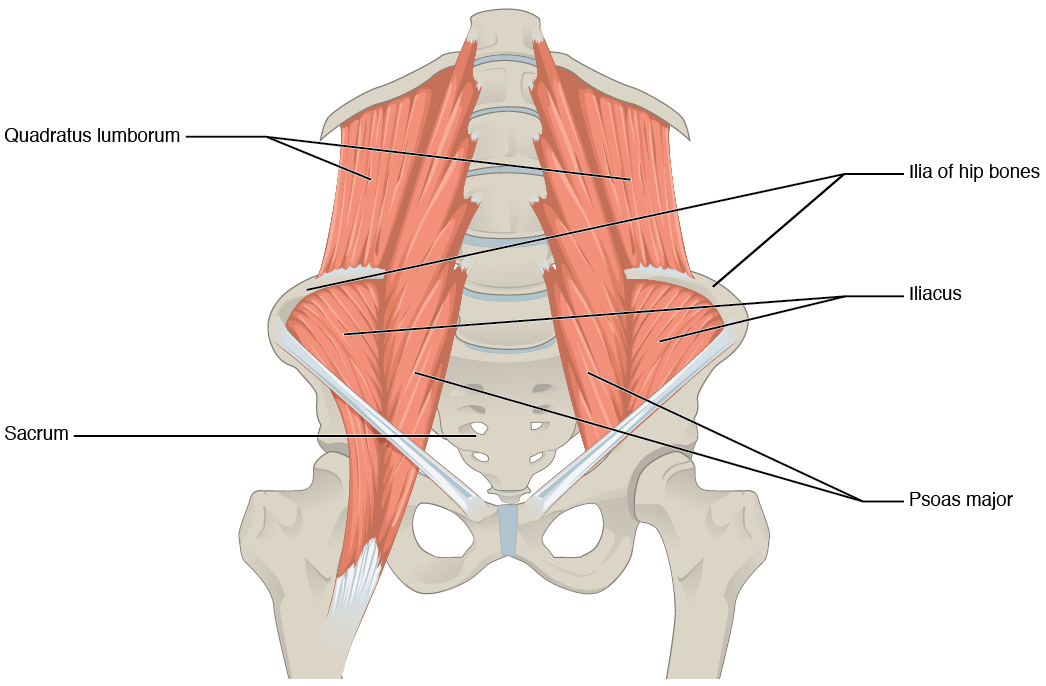
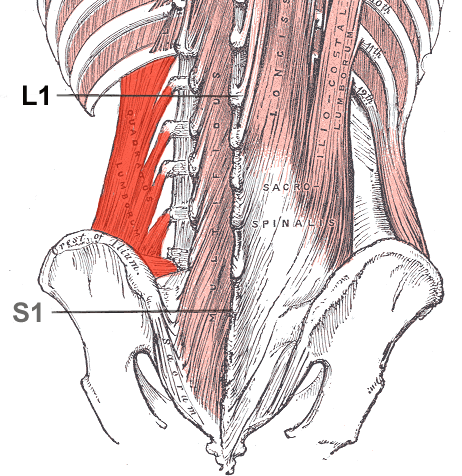
The quadratus lumborum sits deep in the low back on the posterior abdominal wall. It spans between the iliac crest and the lower ribs, with attachments into the lumbar spine, which is why it can feel like a low back pain problem even when the driver is hip or breathing related.
From an origin and insertion perspective, you can think of it as a bridge between pelvis and ribcage. That position makes it a major contributor to lumbar spine stabilization during standing, walking, and carrying.
Key actions include lateral flexion of the lumbar spine, hip hiking (lifting one side of the pelvis), and stabilizing the trunk when you are on one leg. It can also assist forced exhalation, which is one reason breath holding and shallow breathing can keep it “on” all day.
QL Pain That Isn’t “Just Back Pain”
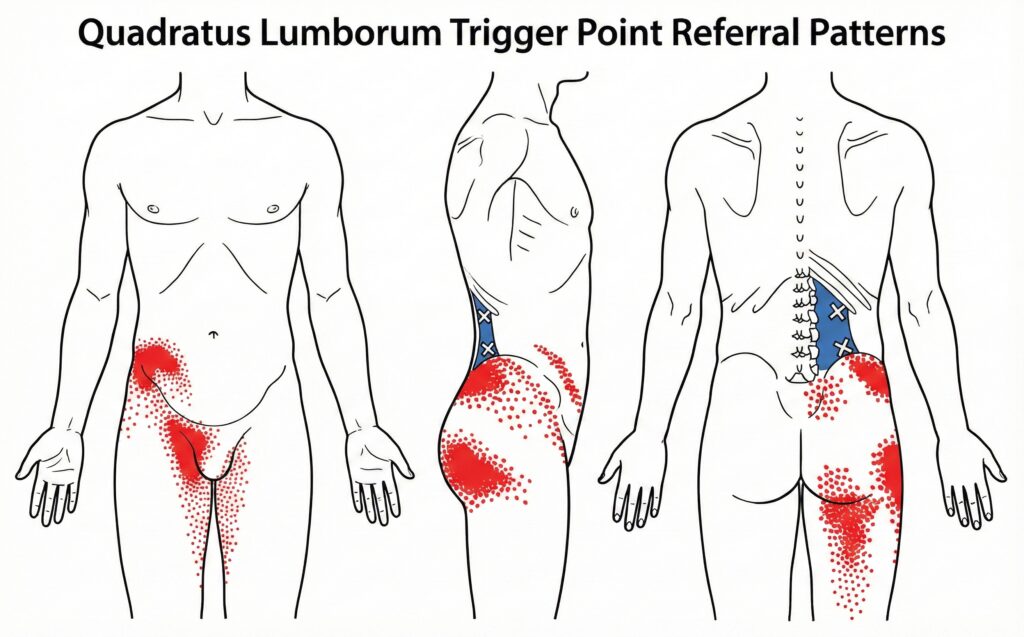
QL referral can mimic sciatica, hip pain, or a dull ache that feels like it is coming from the kidney area. This sciatica mimic is one reason people get worried, especially when the symptoms extend into the buttock, posterior hip, or even toward the thigh.
When the QL calms down, some patients notice changes that seem unrelated to the low back. Common reports include reduced hip tightness, easier hip extension while walking, a deeper breath, or shifts in pelvic floor symptoms, which is a clue that the QL was part of a larger system problem rather than an isolated sore muscle.
Common Symptoms and Referral Patterns (Including What It Can Be Mistaken For)
Most QL syndrome presentations are one-sided, but not always. The classic picture is a deep ache in the low back near the top of the pelvis, with posterior hip tightness and a sense that you cannot stand fully upright.
Pain often increases with side-bending, prolonged standing, or transitions after sitting. Many people also feel a “catch” when they rotate in bed or when they reach across their body.
Functional flags are helpful because they reveal load intolerance rather than just tenderness. Common triggers include walking hills or bridges, climbing subway stairs, getting out of a car, rolling in bed, or standing up after a long sit.
Referred pain patterns vary, but several are common:
In some cases, this shows up as anterior thigh pain rather than a clear low back complaint, which is why QL trigger points can be mistaken for hip flexor strain or lumbar nerve irritation.
Aching along the low back near the iliac crest
Pain into the buttock and posterior hip
Discomfort that wraps slightly toward the side of the trunk
Occasionally a sensation into the anterior thigh, especially with prolonged guarding
A careful differential diagnosis matters because not all “QL pain” is myofascial pain. Conditions to rule out include true radiculopathy (nerve root irritation), kidney issues, hip joint pathology, and SI joint irritation.
Quick Self-Check: Is the QL Overworking for Something Else?
Look for rib flare, pelvic asymmetry, breath holding, and hip weakness, since these commonly force the QL to stabilize when it would rather share the job with the diaphragm, glutes, and deeper abdominal wall. Also pay attention to whether you habitually stand with more weight on one leg, because that can create a long-term compensation pattern.
A simple test is to see whether symptoms change with a slow exhale and gentle abdominal engagement. If the pain softens when you exhale fully and lightly “stack” ribs over pelvis, that is a strong clue the issue is stability-related and tied to breathing mechanics and pelvic control.
Laterality: The Painful Side Isn’t Always the Driver
Laterality is one of the most missed pieces in QL cases. In gait-driven patterns, the contralateral QL may be the primary overactive muscle, even if the other side is the one that hurts.
If you only chase the sore side, you can flare symptoms by increasing guarding in a muscle that is already overloaded. In many cases, treating the driver side first reduces overall tone, unloads the painful side, and improves walking mechanics more quickly.
Step-by-Step: Safe Self-Release and Mobility for QL Trigger Points at Home
Safety comes first because the QL sits near sensitive structures and the lower ribs. Avoid aggressive digging near the kidneys or directly under the ribs, and stop if you notice sharp pain, numbness, fever, urinary symptoms, unexplained weight loss, or anything that feels system-wide rather than mechanical.
Use dose, not force. Short bouts of 30 to 60 seconds with slow breathing are typically more effective than long, painful sessions that provoke more muscle guarding.
Pair self-release with repositioning. If the ribs and pelvis stay locked in rib flare or an anteriorly tilted posture, the QL will re-engage quickly because the nervous system still perceives a stability threat.
Track outcomes that matter. Standing symmetry, stride ease, and breath depth are better metrics than “how tender it was,” since tenderness can increase temporarily even when the pattern is improving.
Self-Release Options: Ball, Wall, and Side-Lying Methods
A wall release is usually safer than the floor because you can control pressure and angle. Place a tennis ball or lacrosse ball against a wall, then position it on the lateral low back just above the iliac crest, slightly to the side of the spine rather than directly on it.
Keep your knees slightly bent and slowly explore small areas until you find a “good hurt” that feels like familiar referred pain, not sharp or electric pain. Stay there for 30 to 60 seconds while breathing slowly, then step away and reassess how you stand and walk.
A side-lying release can work well for people who guard hard. Lie on your side with a pillow under your waist to support the space between ribs and pelvis, then use a gentle sink into the pillow rather than pressing aggressively with an object.
During side-lying release, focus on a slow exhale and let the ribs soften down and widen without bracing. If you feel yourself clenching your abs or holding your breath, reduce pressure and return to a lighter touch.
Breathing Reset to Downshift QL Guarding
A simple breathing reset can reduce accessory breathing and decrease QL over-recruitment. The goal is not a maximal belly push, it is better diaphragmatic control with a longer exhale that tells the nervous system it is safe to let go.
Use the cue “ribs down and wide” without bracing. Take 4 to 6 slow breaths, inhaling quietly through the nose and exhaling longer than you inhale, then stand up and check whether your low back pain and hip tightness feel different.
Rebuild Control: Simple Strength to Keep Relief
Release without strengthening often turns into a cycle of temporary relief and repeat flare-ups. Once symptoms calm, use low-load hip control and pelvic control drills to teach your body that it does not need constant QL tension for lumbar spine stabilization.
Good starting options include side-lying hip abduction variations done slowly and with clean form, plus suitcase carry progressions that train anti-lateral-flexion control. Suitcase carries are especially useful because they challenge the QL to work appropriately instead of spasming as a threat response.
Integrate rib-pelvis stacking into walking mechanics. A small change such as exhaling fully before you start walking, then keeping the ribs “down and wide” as you take the first 10 steps, can reduce the tendency to hip hike and overuse the QL during gait.
When Self-Care Isn’t Enough: Clinical Options in New York City
A good evaluation should look beyond “massage where it hurts.” The most useful assessments consider gait, hip strength, rib motion, breathing strategy, pelvic control, and how your trunk stabilizes during single-leg loading.
Dry needling can be highly effective for QL trigger points when performed precisely. It is common to see non-local changes, including shifts in hip tension, pelvic floor symptoms, and breathing depth, which supports the idea that the QL was part of a broader compensation pattern.
Acupuncture, manual therapy, massage therapy, and physical therapy each have a role. Choice depends on irritability (how reactive the symptoms are), chronicity (how long it has been going on), and movement deficits that need retraining.
Trigger point injections are another option in certain cases. They can reduce pain and muscle spasm, but they are rarely a standalone fix because the driver is often mechanics, load, and breathing, not just a tender spot.
If you are exploring needling-based care in New York, NY, you can read more about options here: dry needling trigger point acupuncture in nyc. For related education on movement, pain, and rehab strategies, the clinic blog is a useful place to continue.
Dry Needling the QL: What Patients Commonly Notice
Immediate effects can include standing more evenly, easier hip extension, a deeper breath, and reduced protective spasm in the low back. Some people also notice that the posterior hip feels less “grippy,” which often changes how they walk up stairs or hills.
The result tends to hold best when it is paired with rib and pelvis mechanics. If rib flare and pelvic position do not change, the nervous system often returns to the same stabilization strategy and the QL tightness returns quickly.
Chiropractic and QL Tightness: Where It Fits
Chiropractic care can help when joint stiffness is driving QL compensation. Spinal and rib mobility work may reduce the need for the QL to brace, especially when the thoracolumbar junction and lower ribs are stiff.
The best outcomes typically happen when adjustments are combined with active rehab for hips, trunk, and breathing. Without strengthening and improved motor control, the QL may go right back to guarding because the underlying stability demand is unchanged.
NYC-Specific Access Considerations
Convenience matters in New York City because adherence is half the battle. Choosing a clinic near your commute, whether that is Midtown Manhattan, the Upper West Side, Harlem, or Downtown Manhattan, makes it easier to follow through with the visits and home program that create lasting change.
Ask whether the provider coordinates with orthopedics or imaging when needed. Persistent neurologic symptoms, red flags, or a lack of progress should trigger a broader differential diagnosis rather than repeated treatment of the same spot.
Common Mistakes That Keep QL Trigger Points Coming Back (and What to Do Instead)
A common mistake is stretching harder. Aggressive stretching often increases guarding, so a better approach is downshift plus gentle lengthening, using breathing to reduce threat response before you add range.
Another mistake is treating only the painful side. Screen gait asymmetry and contralateral driver patterns, because laterality issues can make the “quiet” side the real source of overload.
A third mistake is releasing without re-training. Add rib-pelvis stacking, hip control, pelvic control, and carry-based stability work so the QL is not forced to stabilize everything by itself.
A fourth mistake is ignoring workstation and daily load. Workstation ergonomics, walking breaks, and bag-carry strategies matter in New York, NY because so much daily life involves sitting, commuting, and carrying.
Desk, Train, and Gym Tweaks for New Yorkers
Workstation basics help more than people expect. Keep feet supported, set monitor height so you are not craning forward, and take micro-breaks every 30 to 45 minutes to reduce sustained compression and bracing.
Daily load is a hidden driver of laterality. Alternate shoulder bags, use backpacks when possible, and avoid one-sided carry on longer walks, especially if you notice hip hiking or a recurring pinch at the iliac crest.
Red Flags: When It’s Not a Trigger Point Problem
Get urgent evaluation for fever, unexplained weight loss, night pain that does not change with position, trauma, bowel or bladder changes, or progressive weakness. These red flags suggest the problem may not be myofascial pain and should not be managed as a simple trigger point issue.
Consider a medical workup for kidney-related symptoms or true nerve root signs. Radiating pain with numbness, tingling, reflex changes, or clear strength loss needs a careful diagnosis and appropriate differential diagnosis, even if the QL feels tender.
FAQs About QL Trigger Points
Q: How to self release quadratus lumborum?
Use a ball against a wall rather than the floor so you can control pressure. Place a tennis ball or lacrosse ball just above the iliac crest on the side of the low back, apply mild pressure for 30 to 60 seconds, and pair it with slow exhales to reduce muscle guarding.
Afterward, reassess by standing and taking a short walk. If your stride feels easier and you can breathe deeper, you likely hit the right area with the right dose.
Q: Can a chiropractor help with tight QL?
Yes, chiropractic care can help when joint restriction, rib stiffness, or spinal mechanics are part of the issue. Improving motion in the lumbar spine and lower ribs can reduce the QL’s need to compensate.
However, the QL is a deep stabilizing muscle and is often tight because it is substituting for poor hip control, pelvic control, or diaphragmatic control. Many people get longer-lasting relief when chiropractic care is combined with manual therapy such as dry needling or myofascial work, plus active rehab to change the underlying compensation pattern.
Q: Where is the QL trigger point?
Commonly, it is along the deep lateral low back between the iliac crest and the lower ribs. It is usually slightly to the side of the spine rather than directly on the spine itself.
Because it is deep, it can feel like it is “under” the back muscles. That depth is one reason wall release tends to be safer and more tolerable than aggressive floor pressure.
Q: What emotions are stored in the QL?
There is no strong evidence that specific emotions are “stored” in the quadratus lumborum. Stress can still matter, because higher stress often increases baseline muscle tone and amplifies threat response, which can make trigger points more reactive.
If you notice flare-ups during high-stress periods, treat it as a useful clue about breathing, sleep, and recovery load. Addressing breathing mechanics and overall training volume often reduces how easily the QL goes into spasm.
Conclusion
QL-related pain is often less about a “tight muscle” and more about a stability strategy that has become expensive for your body. When you approach quadratus lumborum trigger points with the right mix of gentle self-release, breathing resets, and strength that restores rib-pelvis stacking, the symptoms usually become more predictable and more manageable.
If the pattern keeps returning, a New York City clinician who evaluates gait, hips, ribs, and breathing, and who can apply targeted options like dry needling, manual therapy, physical therapy, acupuncture, or coordinated care, can help you move from short-term relief to durable change.
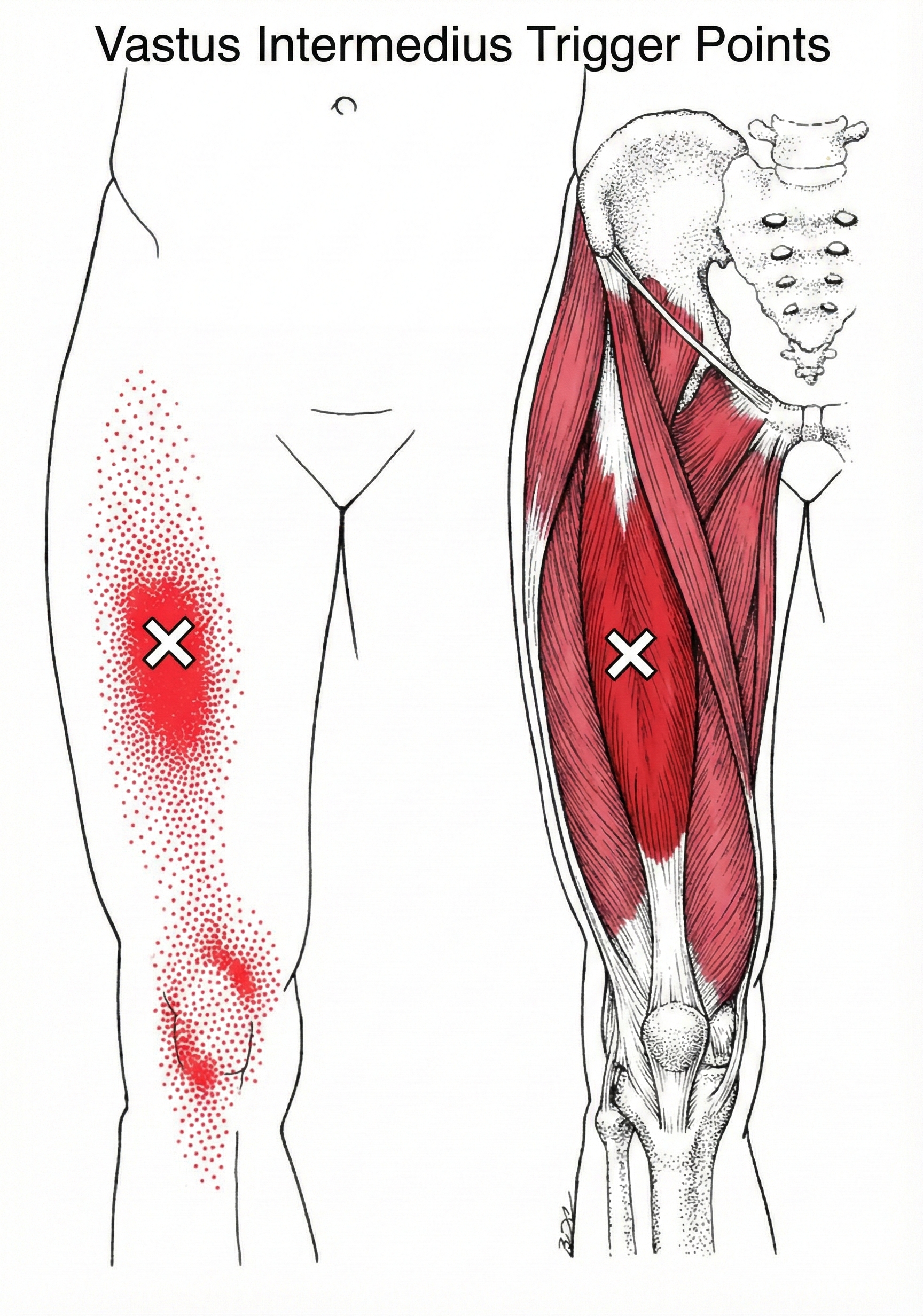
You go down a few subway flights and your knee feels “pressurized,” like something is pushing from behind the kneecap. When working with Vastus Intermedius Trigger Points, that deep knee…
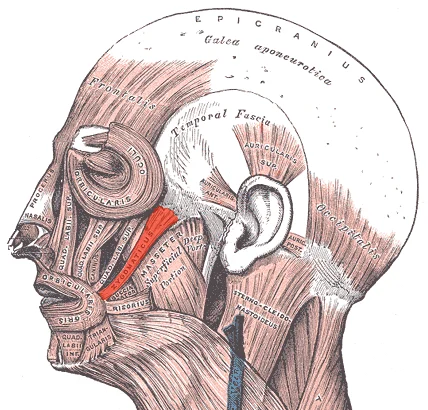
If you have a nagging ache along your cheekbone, a “tight face” feeling on one side, or temple pressure that shows up with chewing, it can be hard to tell…
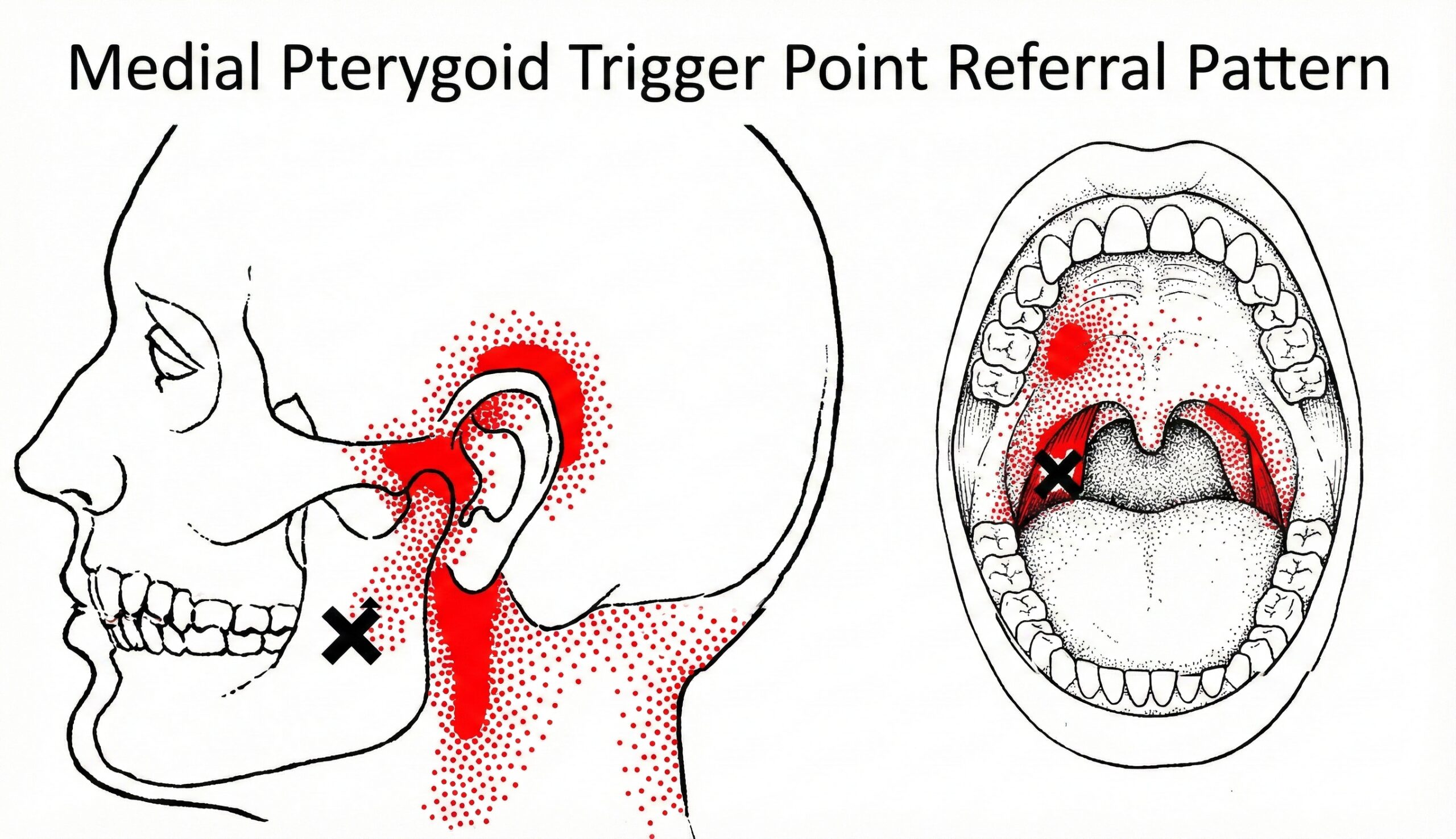
If your jaw feels “stuck,” your ear feels full, or chewing suddenly seems harder, it is easy to assume the problem must be your teeth or your ear. When working…
Ready when you are.
Limited spots each week — book now to reserve yours.
Evidence-based acupuncture and dry needling on the Upper West Side. From chronic pain and headaches to pelvic floor dysfunction, Dr. Jordan Barber pairs the highest level of training with care that actually listens.
This site does not provide medical advice. Always consult a qualified healthcare professional before making changes to your health. Read our full disclaimer.