Adenomyosis Treatment: Exploring the Role of Fascia and Dry Needling
Adenomyosis is a chronic gynecological condition that can lead to intense pelvic pain, cramping, heavy bleeding, and even bladder or rectal discomfort. Despite increasing awareness, many individuals with adenomyosis are left without long-term relief—even after hormonal treatments or surgery.
At my clinic, I take a multidisciplinary approach to pelvic pain, using tools like pelvic floor dry needling to complement conventional medical treatment. For many patients, especially those experiencing residual or chronic pain, addressing myofascial dysfunction and pelvic floor hypertonicity becomes a critical piece of the puzzle.
What Is Adenomyosis?
Adenomyosis occurs when endometrial tissue—normally lining the uterus—grows into the muscular wall of the uterus (the myometrium). This ectopic tissue bleeds and swells during each menstrual cycle, causing:
Heavy or prolonged menstruation
Severe cramping (dysmenorrhea)
Chronic pelvic pain
Pain during intercourse (dyspareunia)
Pain with bowel movements or urination
Unlike endometriosis, which typically affects areas outside the uterus, adenomyosis is confined to the uterine muscle but can still cause widespread effects on nearby fascia, nerves, and pelvic floor muscles.
Why Pain Persists: Fascia and Myofascial Dysfunction
Even after the acute inflammatory process is addressed through hormonal suppression or hysterectomy, many patients continue to experience pain. Why?
One answer may lie in the myofascial system—the dense connective tissue that surrounds muscles, organs, and nerves. Repeated pain cycles and inflammation can:
Alter fascial mobility and hydration
Cause myofascial trigger points and muscular guarding
Sensitize pelvic nerves
Create compensatory tension patterns across the pelvic floor and abdominal wall
A 2021 study published in the European Journal of Pain found that women with chronic pelvic pain related to endometriosis often have widespread muscle issues and increased sensitivity, including pelvic floor muscle spasms, lower pain thresholds, and spinal sensitivity. These results indicate that lasting pain may be caused by changes in the nervous system and muscle trigger points, even when hormonal or surgical treatments for endometriosis are applied.¹
How Pelvic Floor Dry Needling Help
Dry needling involves inserting a thin, solid needle into specific myofascial trigger points—taut, irritable bands of muscle that refer pain and contribute to dysfunction. In patients with adenomyosis, dry needling may help:
Release chronically contracted pelvic and abdominal muscles
Reduce pressure on sensitized nerves
Improve fascial glide and hydration
Support neuromuscular reset of the pelvic floor
This technique is especially valuable when combined with manual therapy, breath retraining, and collaboration with pelvic PTs or gynecologists.
A randomized controlled trial demonstrated that dry needling significantly reduced pelvic pain, improved function, and enhanced quality of life in patients with chronic pelvic pain.² While the study was not adenomyosis-specific, the mechanisms of referred myofascial pain are highly relevant.
Because the uterus is embedded in layers of fascia that also connect to the bladder, rectum, pelvic floor, and hips, tension in one region can affect surrounding tissues. Chronic inflammation from adenomyosis may cause the entire fascial web to stiffen, perpetuating discomfort even after bleeding is controlled.
Manual therapies for myofascial issues, like pelvic floor trigger point release and dry needling, can help relieve chronic tension and reduce pain in pelvic pain conditions. A 2021 study showed that women with pelvic pain from endometriosis often have muscle spasms in the pelvic floor, leading to ongoing symptoms even after hormonal treatments. Dry needling has been found to decrease sensitivity and improve pain tolerance in those with chronic pelvic pain, as shown in a 2024 randomized controlled trial. Also, manual therapy methods, including myofascial release, are known to help with pelvic floor tightness and improve movement.1,2,3
Research Highlights
There is substantial evidence that women with chronic pelvic pain related to gynecologic conditions, such as endometriosis, often exhibit widespread myofascial dysfunction and sensitization, including pelvic floor muscle spasm and trigger points1
Recent randomized controlled trials demonstrate that dry needling can significantly reduce pain and central sensitization in women with chronic pelvic pain, suggesting benefit for neuromyofascial pain mechanisms2
Manual therapy techniques, including myofascial release and pelvic floor massage, have been shown to provide symptomatic relief for pelvic floor dysfunction and chronic pelvic pain, although methodologies and outcomes can vary3
What You Can Expect in My Clinic
As a specialist in pelvic floor dry needling and acupuncture, I work with patients who’ve experienced persistent pelvic pain after adenomyosis diagnosis or treatment. Care in my clinic is:
Individualized: You’ll receive a full neuromyofascial assessment to identify contributing structures and patterns.
Integrated: I often work in tandem with pelvic floor physical therapists and physicians.
Gentle and trauma-informed: Treatments are guided by your comfort level and are explained step-by-step.
We don’t treat adenomyosis directly—but we treat you, your pain, and the lasting impacts it may have on your pelvic floor, nerves, and mobility.
Take the Next Step Toward Relief
If you’re still experiencing pelvic pain, tension, or discomfort after a diagnosis or treatment for adenomyosis, know that you’re not alone—and there are effective options that go beyond hormones or surgery.
My clinic offers targeted dry needling, acupuncture, and neuromyofascial care in NYC, with a specialty in complex pelvic conditions.
Stratton P, Khachikyan I, Sinaii N, Ortiz R, Shah J, Schwertz D, et al. Widespread myofascial dysfunction and sensitization in women with endometriosis-associated chronic pelvic pain. Eur J Pain. 2021;25(2):384-397. doi:10.1002/ejp.1681. Available at: https://www.ncbi.nlm.nih.gov/pmc/articles/PMC7979491/
Khoshbin M, Ghamkhar L, Arab AM, et al. Effect of dry needling on pain and central sensitization in women with chronic pelvic pain: a randomized controlled trial. Pain Pract. 2024. doi:10.1111/papr.13495. Available at: https://pubmed.ncbi.nlm.nih.gov/38841514/
If you’re exploring dry needling for pain relief, particularly for conditions like myofascial pain syndrome, back pain, or other musculoskeletal disorders, you’ve likely encountered a confusing array of information. One of the biggest…
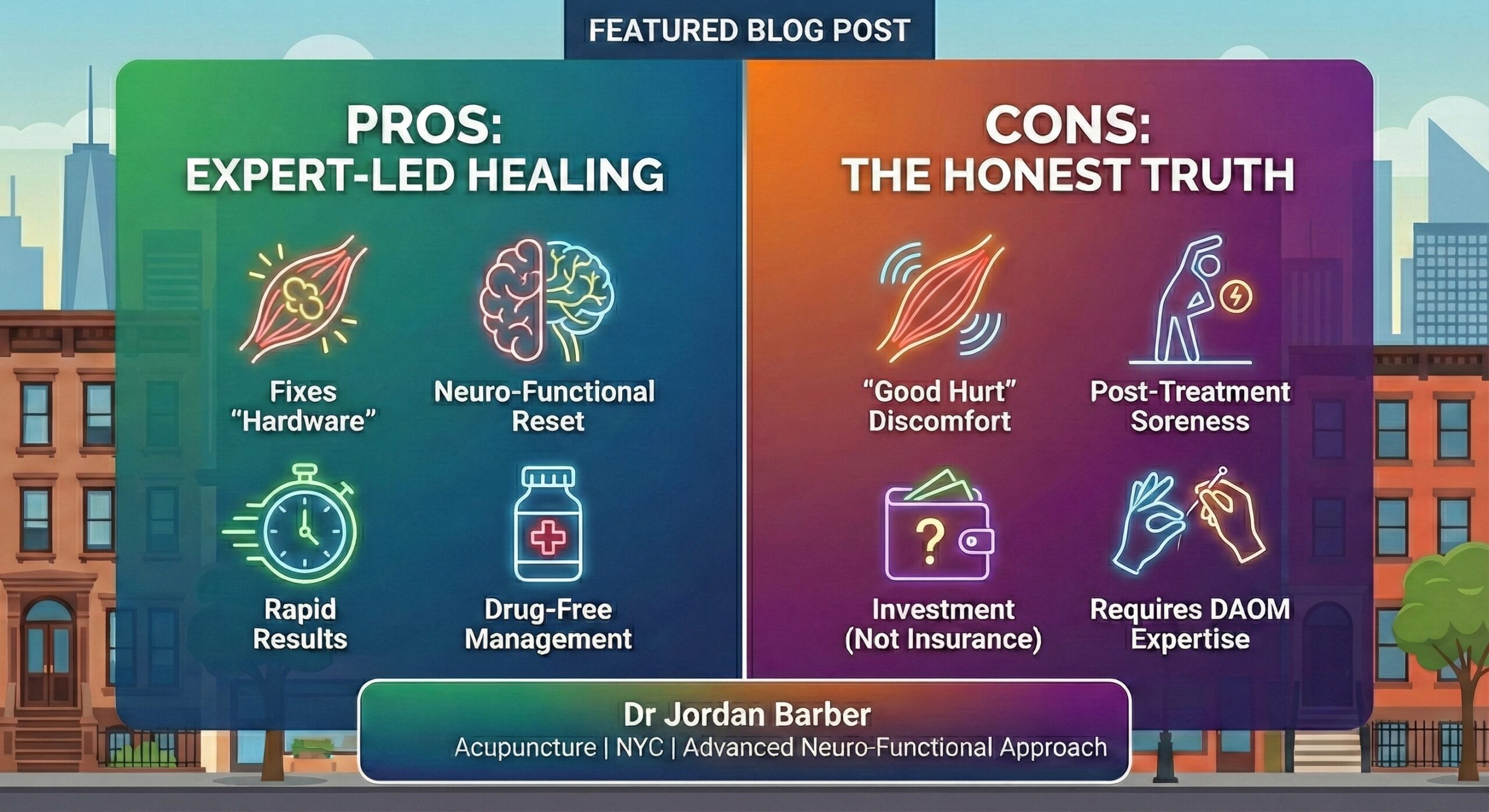
If you have Googled “dry needling pros and cons,” you’ve likely found generic lists telling you that it “might hurt” or “isn’t always covered by insurance.” While true, these lists miss the…
If you’re living with an overactive bladder, constant urinary frequency, sudden urgency, or urge incontinence, you already know how disruptive these symptoms can be. At our clinic, we offer Percutaneous Tibial Nerve Stimulation (PTNS) as a…
118 W. 72nd, Rear Lobby, Upper West Side, NY 10023 Evidence-based acupuncture and dry needling on the Upper West Side, NYC. From chronic pain, headaches, and pelvic floor dysfunction, Dr. Jordan Barber integrates the highest level of training with compassionate care to help you thrive. Disclaimer: This site does not provide medical advice. Always consult a qualified healthcare professional before making changes to your health. Read our full disclaimer
Quick Links
Got Questions?
Limited spots available each week book now to reserve yours