What Is TCM? The 4 Real Pillars of Chinese Medicine (And Why “Cupping” Isn’t One of Them)
Why the internet’s “7 Pillars” lists are marketing fluff—and the actual blueprint for how this medicine works.
If you Google “What is TCM?” (Traditional Chinese Medicine), you will find a lot of lists. Some say there are 5 pillars. Some say 7. I’ve even seen a list of 10.
It seems like every time a clinic buys a new gadget, they add a “pillar” to the list.
Let’s be real for a second. If you build a house on 7 uneven posts—where some are structural beams and others are just decorative throw pillows—that house is going to fall down.
At my clinic, we like structure. We like history. And we like things that actually make sense.
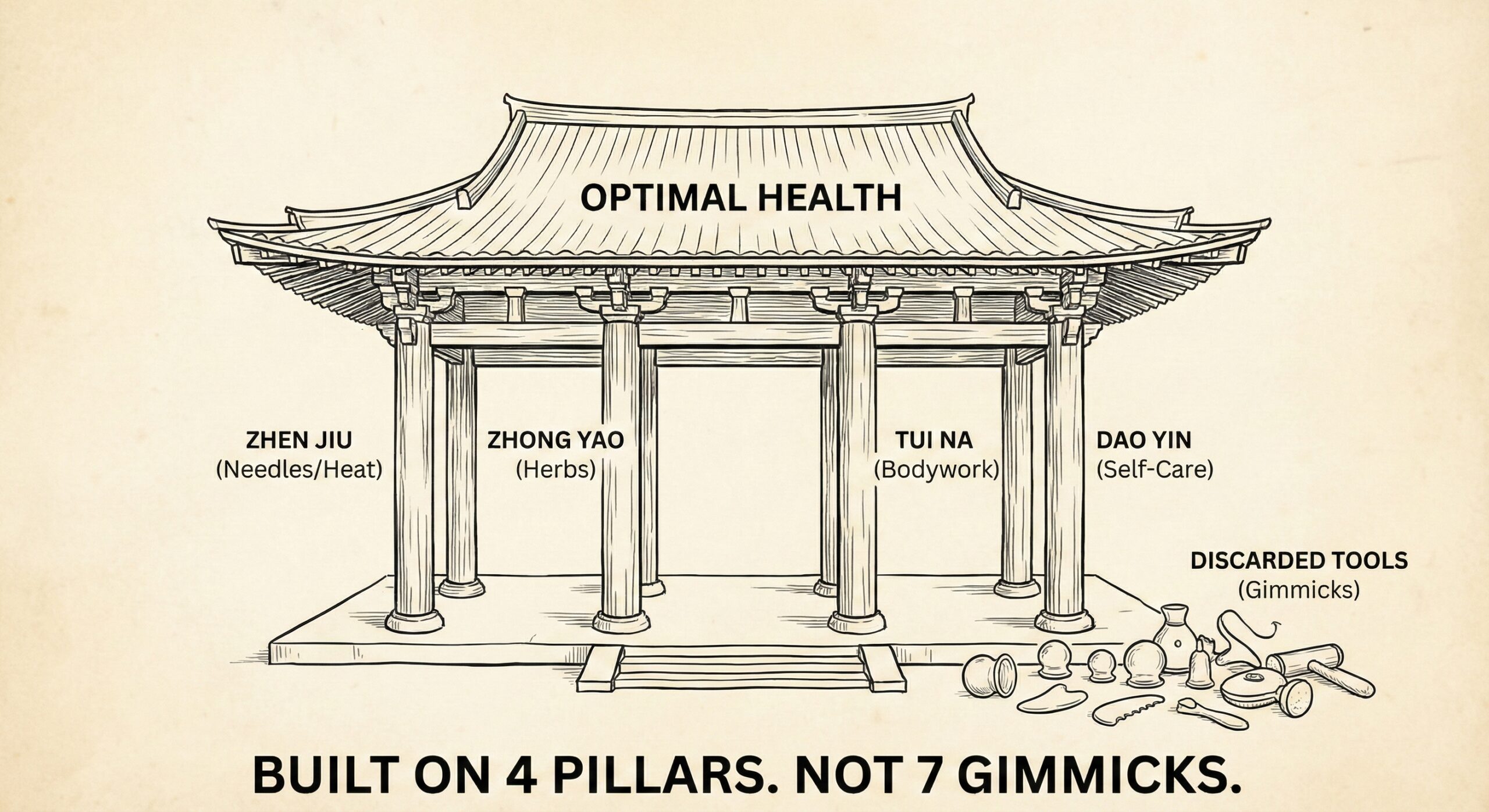
According to the classical texts (and basic logic), Chinese Medicine isn’t a random grab-bag of cool tricks. It is a complete medical system built on Four Fundamental Pillars. Everything else you see on Instagram—cupping, gua sha, jade rolling—is just a tool used by one of these pillars.
Here is the blueprint of the house we build for your health.
Pillar 1: Acupuncture & Moxibustion (Zhen Jiu)
The Energetic Architect
Competitors often list Acupuncture and Moxibustion as separate things. That’s like listing “Inhaling” and “Exhaling” as separate ways to breathe.
In Chinese, the word for Acupuncture is Zhen Jiu.
Zhen: Needle (Metal)
Jiu: Moxibustion (Fire/Heat)
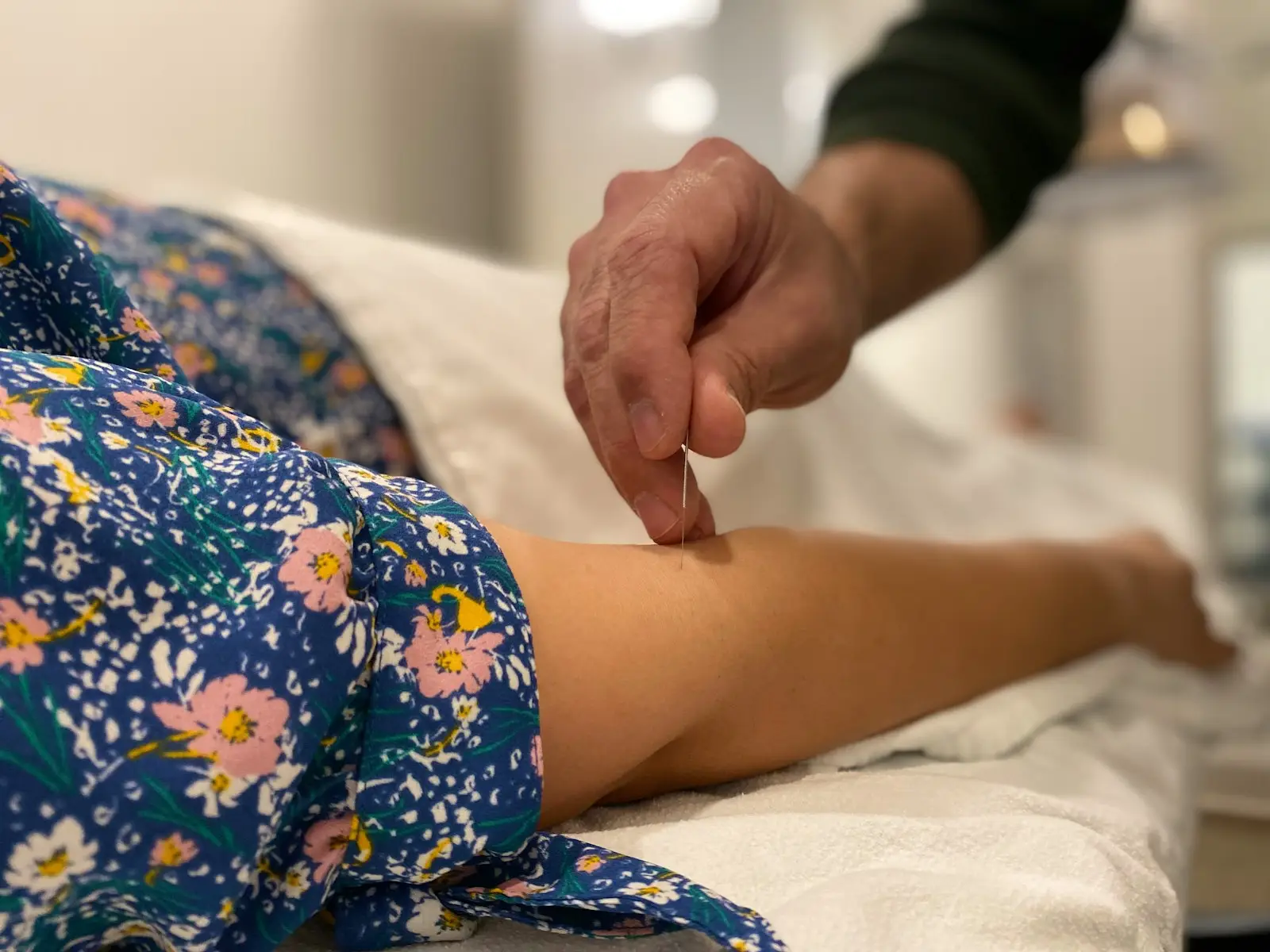
They are inseparable. You cannot manipulate the body’s energy (Qi) purely with metal; sometimes you need the warmth of moxa to fuel the movement. This pillar is about communication. We use these tools to tell your nervous system to calm down, wake up, or move traffic around a blockage.
Dr. Barber’s Take: If a clinic tells you they do “Acupuncture” but doesn’t understand the role of heat or moxa, they’re only doing half the job.
Pillar 2: Herbal Medicine (Zhong Yao)
The Internal Foundation
While Acupuncture moves the energy you have, Herbal Medicine gives you the substance you need.
Think of your body like a car. Acupuncture is the mechanic tuning the engine and fixing the electrical wiring. Herbal medicine is the gas in the tank and the oil in the gears. If you are running on empty (burnout, anemia, fatigue), no amount of needling will fix you. You need substance.
The Myth: Many “7 Pillar” lists try to separate “Diet” into its own pillar. In reality, food and herbs exist on the same spectrum. A scallion is a food; a dried scallion bulb (Cong Bai) is an herb for treating colds. It’s all internal chemistry.
Pillar 3: Tui Na & Bodywork (An Mo)
The Structural Framer
Here is where the internet gets it wrong. You will see lists that claim Cupping and Gua Sha are pillars of TCM.
Let’s set the record straight: Cupping is not a pillar. It is a tool. Listing Cupping as a pillar of medicine is like saying “The Hammer” is a pillar of Architecture. It’s a great tool, but you can’t live inside a hammer.
These tools fall under the umbrella of Tui Na/An Mo (Chinese Manual Therapy). This is the physical manipulation of the fascia, muscles, and joints. Whether we use our hands, a cup, or a scraping tool, the goal is the same: to physically realign the structure so the energy can flow.
You can hire the best architect (Acupuncturist) and the best contractor (Herbalist), but if you wreck the house every night, it’s going to crumble.
This pillar is often called Qi Gong in modern terms, but the classical term is Dao Yin (“Guiding and Leading”). These are the ancient breathwork and movement exercises designed to maintain your own health.
Qi Gong is a relatively modern (20th century) umbrella term.
Dao Yin is the vintage original—specific movements found in ancient tombs (like Mawangdui) that date back thousands of years.
This pillar also includes Yang Sheng (“Nourishing Life”)—the art of eating, sleeping, and living in accordance with the seasons. It’s the homework we give you so you don’t have to see us forever.
The Verdict: 4 Strong Legs > 7 Wobbly Ones
When you strip away the marketing fluff, Chinese Medicine is elegant and simple.
Zhen Jiu (Acupuncture & Moxa): Fix the wiring.
Zhong Yao (Herbal Medicine): Fill the tank.
Tui Na (Bodywork): Align the frame.
Dao Yin (Self-Cultivation): Drive responsibly.
If a clinic doesn’t know the difference between a load-bearing pillar and a throw pillow, why would you trust them with your health? We skip the marketing fluff. Choose a published scholar who knows the actual blueprint, finds the structural cracks, and uses the right pillar to stabilize you.
No fluff. just straight-forward, structural medicine.
References (For the Geeks)
The Unity of Acu-Moxa:Huangdi Neijing Lingshu (The Yellow Emperor’s Classic of Medicine). The text consistently refers to the therapy as Zhen-Jiu, implying a unified practice of needle and thermal therapy.
Dao Yin History: Despeux C. Taoism and Self Knowledge: The Chart for the Cultivation of Perfection. Brill; 2018. (Explains the historical precedence of Dao Yin over the modern term Qi Gong).
The Hierarchy of Tools: Unschuld PU. Medicine in China: A History of Ideas. University of California Press; 2010. (Delineates the core disciplines vs. folk modalities).
Acupuncture and dry needling are two popular medical treatments that involve the insertion of thin needles into the body. While they may appear similar at first glance, they are distinct…
Hard Flaccid Syndrome (HFS) is a condition that affects the penis and pelvic area. It is not caused by infection or hormones but by muscle tension and nerve problems in the…
Author: Dr. Jordan Barber, DAOM, L.Ac | Topic: NY Health Law & Scope of Practice If you are searching for “dry needling in NYC” or asking “Can a Physical Therapist dry needle in NY?”, you…
118 W. 72nd, Rear Lobby, Upper West Side, NY 10023 Evidence-based acupuncture and dry needling on the Upper West Side, NYC. From chronic pain, headaches, and pelvic floor dysfunction, Dr. Jordan Barber integrates the highest level of training with compassionate care to help you thrive. Disclaimer: This site does not provide medical advice. Always consult a qualified healthcare professional before making changes to your health. Read our full disclaimer
Quick Links
Got Questions?
Limited spots available each week book now to reserve yours