Pubic pain with walking or turning
Often sharp or catching with the first few steps, changes of direction or longer strides.

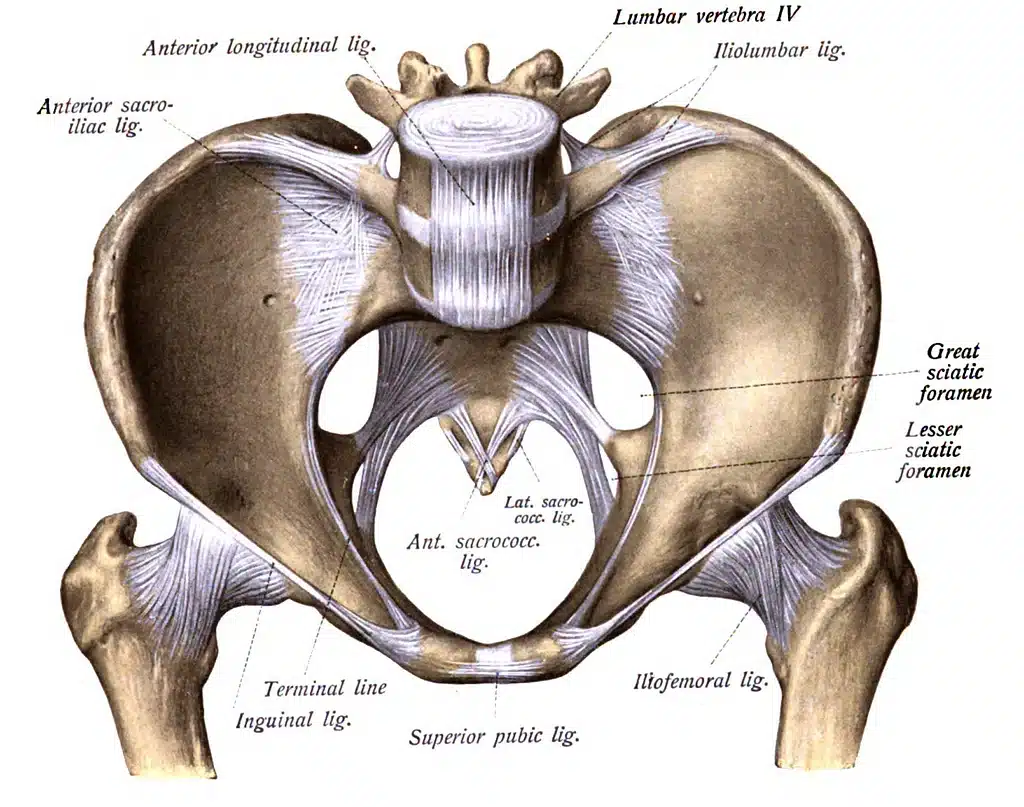
The pain sits at the center of the pubic bone and can be sharp or catching. It flares with the first few steps, turning, rolling in bed or getting out of a car. Squeezing the legs together, stairs and single-leg tasks often set it off.
The pubic symphysis is the joint where the two sides of the pelvis meet at the front. When the inner thigh muscles, lower abdominals and pelvic floor don’t share load well, force concentrates there. The pain is felt at the joint, but the inner thigh attachment and a tight pelvic floor are often involved. This is common after pregnancy and in sports with sprinting, kicking or cutting.
I treat the tight inner thigh, abdominal and pelvic floor muscles with dry needling, a form of acupuncture. The obturator nerve runs between the adductor muscles of the inner thigh, and when they tighten they can press on it. Needling the adductors gives that nerve room. I also give guidance on adjusting the movements that set it off.
Most people have had rest, medication for pain and inflammation, and imaging. Rest often settles it until activity starts again. Imaging doesn’t show tight knots at the inner thigh attachment or a guarded pelvic floor. General strengthening added too early can increase guarding and keep the area reactive. If you’ve been through pelvic floor PT, dry needling wasn’t on the table: New York law keeps PTs and chiropractors from doing it.
I start by asking which movements set off your pain, whether it began after pregnancy or sport, and what you’ve tried. Then the exam:
Obstetrics, orthopedics, sports medicine and pelvic floor PT are the providers I work beside. If something points back to one of them, I’ll let you know and send them my findings.
Not always. Some people do have widening at the joint, and that is evaluated medically. Many others have reactive muscles around the pubic bone and reduced coordination. The plan depends on your movement triggers, your exam and your history.
Not necessarily. Imaging can rule out major problems, but muscle and coordination problems often don’t show on MRI. If your history suggests a significant injury, I’ll recommend medical evaluation first.
Through movement testing and pressing on specific attachment points. Hip joint pain usually shows up in certain ranges and with joint loading. Pubic pain tends to spike with walking, squeezing the legs and rolling in bed.
Dry needling to the inner thigh, abdominal and pelvic floor muscles that reproduce your pain. Loosening the adductors also eases pressure on the obturator nerve between them. I pair it with practical changes to the movements that set it off.
It varies with how irritable the area is, whether you’re postpartum, your sport and how long it has been going on. I set a plan after your exam and adjust as you respond.
Get urgent care for severe pain after a fall or collision, or if you can’t bear weight. The same applies to fast-worsening swelling or redness, fever, new bowel or bladder changes, or worsening numbness or weakness. These need a doctor to rule out fracture, infection or other causes.
Adults with pelvic floor, nerve and orthopedic pain, along with neurological conditions. Most of my patients come to me after other care hasn't fully settled things. If you're looking for general wellness acupuncture, I'm not the right fit.
We review your history and what you've already tried. I assess the muscles and nerves involved, and you're treated the same day.
It depends on the condition. Pelvic and orthopedic plans usually run 4 to 6 weeks. Neurological plans are usually 2 visits a week for 6 weeks or 3 a week for 4. After that, visits space out so the changes hold. These are typical timelines, not promises.
Yes. I work alongside doctors, physical therapists and specialists. If something I find needs a closer look from one of them, I'll tell you.
I'm an out-of-network provider. You pay at the time of your visit, and my office submits the claim so any reimbursement comes to you. Free benefit checks are available before your first visit through the verification form, and HSA and FSA cards work. I don't take Medicare or Medicaid, though some Medicare Advantage plans reimburse out-of-network care. Full insurance details
Yes. I treat adults, teens and children, though I don't specialize in infants or toddlers.
Yes. Book a free discovery call to ask your questions and see whether we're a good fit.
Dry needling is a form of acupuncture. Fine needles go into tight bands of muscle and trigger points to lower muscle tension and change how the area is signaling.
You may feel a brief twitch or a deep ache as the needle reaches tight muscle. It passes quickly, and any soreness afterward usually fades within a day or two.
It's generally safe with a properly trained practitioner. Needles are sterile and single-use, and I check your health history first, including blood thinners. In New York, dry needling can only be performed by licensed acupuncturists, MDs and DOs. Physical therapists and chiropractors aren't permitted to perform it.
Eat something light beforehand and wear loose clothing that lets me reach the area being treated.
Usually not. Ultrasound helps in a few specific cases, but it hasn't been shown to improve results for common trigger points. A careful hands-on exam is what guides the needle. More on ultrasound-guided dry needling
Dry needling aimed at the pelvic floor and the hip and abdominal muscles around it, for pain, tension and urinary symptoms driven by those muscles and their nerves. More on pelvic floor dry needling
Sometimes, depending on the muscles involved, and you'll be draped throughout. Treatment always follows your consent and comfort. I don't do internal exams or internal treatment.
No, though it helps if you've already seen a doctor or pelvic floor physical therapist. Bring any notes or imaging you have.
Completely. I've heard it all, and there's no judgment here, just a straightforward conversation so we can treat what's going on.
Yes, I treat adults of every gender and identity. After gender-affirming surgery involving the pelvis, bring your surgical notes and we'll decide together what fits.
We also offer house calls and after-hours appointments by arrangement.
Private Access & House Calls →Ready when you are.
Limited spots each week — book now to reserve yours.

118 W. 72nd St, Rear Lobby, New York, NY 10023
Evidence-based acupuncture and dry needling on the Upper West Side. From chronic pain and headaches to pelvic floor dysfunction, Dr. Jordan Barber pairs the highest level of training with care that actually listens.
Member Clinic
An independent practice and member of New York Acupuncture Group, sharing clinical space and operations in Manhattan.
This site does not provide medical advice. Always consult a qualified healthcare professional before making changes to your health. Read our full disclaimer.